
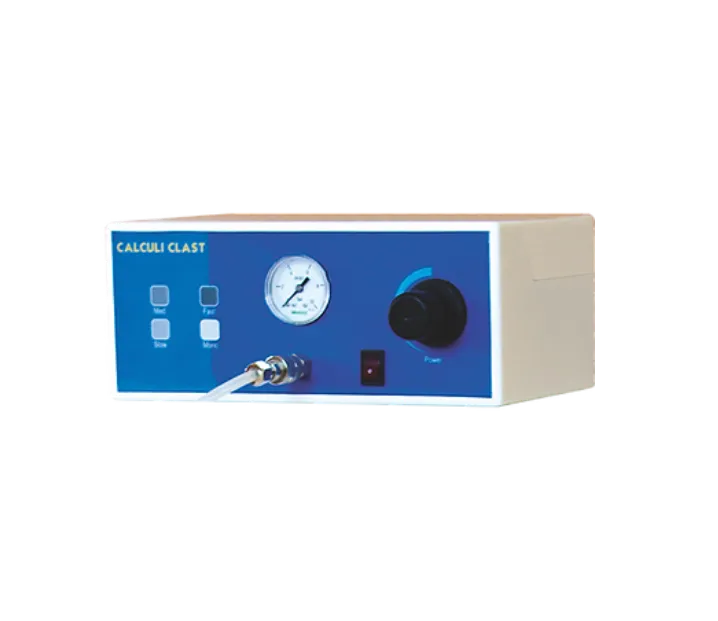
The Calculiclast is a robust and highly efficient intracorporeal pneumatic lithotripsy system engineered for the rapid fragmentation of urinary calculi. Designed to be a dependable workhorse for urologists, this pneumatic lithotripter uses high-precision kinetic energy to break stones in the kidney, ureter, and bladder, offering a reliable alternative to more expensive laser systems.

Broad Versatility
Highly effective for stones located in any part of the urinary tract, including the renal pelvis, ureter, and bladder.

Enhanced Safety Profile
The ballistic principle ensures that energy is confined to the stone, minimising thermal risk to the surrounding urothelium.

Universal Compatibility
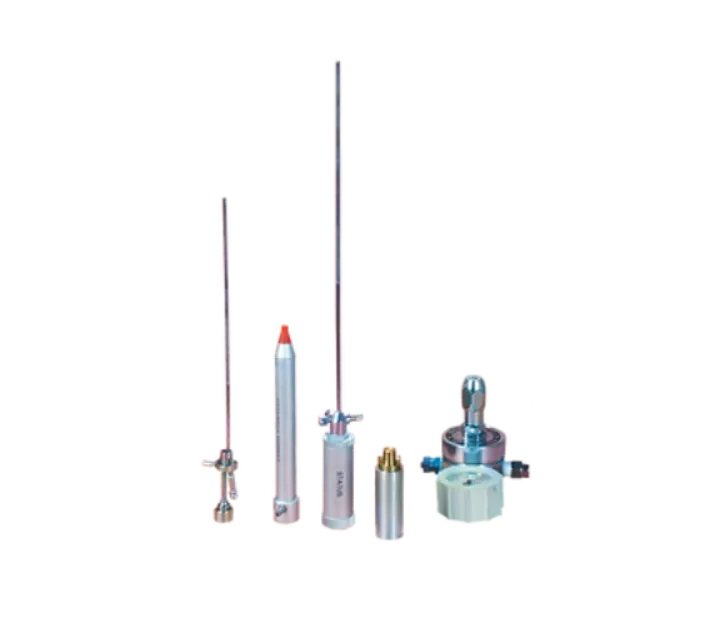
Designed for use with standard semi-rigid and rigid endoscopes.
With numerous installations and countless procedures done,
the Pneumatic Lithotripsy system is trusted by many healthcare providers around the world
- CDSCO Approved
- IEC 60601-1 Certified
- ISO 13485:2016
1. What is the Calculiclast Pneumatic Lithotripsy System used for?
Calculiclast is an intra-corporeal pneumatic lithotripsy system designed to fragment urinary tract stones, including kidney, ureteral, and bladder stones. It delivers high-pressure air pulses through a probe to break stones into small fragments during endoscopic urological procedures.
2. How does the pneumatic technology in Calculiclast work?
The system generates controlled high-pressure air pulses that travel through the handpiece and probe, delivering mechanical impacts to the stone. This pneumatic action efficiently breaks stones with minimal heat generation and reduced tissue damage.
3. What are the operating requirements of the Calculiclast system?
Calculiclast operates on a standard 230 VAC, 50 Hz power supply and uses compressed air or pressurised oxygen as the pressure source. The working pressure range is typically 1.8 to 4 kg/cm², with a maximum input pressure of up to 6 kg/cm².
4. What advantages does Calculiclast offer compared to other lithotripters?
Calculiclast provides effective stone fragmentation with minimal tissue impact, affordability for broader healthcare access, and easy setup due to its compact, portable design.
5. Does Calculiclast require special infrastructure or installation?
No, Calculiclast works with standard power supply and compressed air or oxygen sources commonly available in urology setups. This allows easy integration into existing operating rooms without additional infrastructure changes.